
The most effective retail environments are those that guide the customer’s eye and hand. Visual merchandising strategies are the deliberate, creative act of designing a store’s layout and displays to maximize sales. In this pursuit, lighting is not merely a utility; it is a powerful, silent salesperson. Modern advancements have elevated this tool, with LED technology offering unprecedented control over color, intensity, and energy use. When strategically deployed, LED lighted fixtures can transform passive browsing into active buying, directly targeting the psychology behind impulse purchases.
Impulse buys are often triggered by a moment of visual delight or a sudden, compelling product revelation. They are the unplanned additions to the cart that boost average transaction value. The right lighting creates these moments. It can make a product appear more vibrant, luxurious, or urgent. While traditional fluorescent lighting often washes out colors and creates unflattering shadows, LEDs provide a clean, focused light that can be precisely directed.
This article explores specific, actionable visual merchandising strategies centered on LED lighted fixtures. We will examine how different lighting techniques influence customer perception and behavior, provide practical applications for various retail segments, and outline how to measure the impact of these investments on your bottom line.
The Psychology of Light in Retail Environments
Light profoundly influences human emotion and behavior, a principle retailers have leveraged for decades. Scientifically, light affects our circadian rhythms, mood, and even perception of time spent in a space. In a store, lighting can make customers feel energized, relaxed, or intrigued. The goal is to use these psychological effects to create a journey that feels natural and culminates in a purchase.
Bright, cool-white LED lighting in entryways and main aisles creates a sense of alertness and can quicken the pace of movement, effectively guiding traffic flow. Conversely, warmer, softer LED lighting in fitting rooms or high-margin product zones can make customers feel more comfortable and inclined to linger, increasing dwell time and the likelihood of an add-on sale. This contrast is a foundational visual merchandising strategy: using light to choreograph the customer’s pace and focus.
The most critical psychological lever is attention. Our eyes are instinctively drawn to the brightest point in our field of vision. LED fixtures allow for extreme precision in creating these points of focus. By illuminating a specific display or product with significantly higher luminance than its surroundings, you create a visual hierarchy that shouts “look here.” This targeted draw is the first essential step in triggering an impulse decision.
Key LED Lighting Techniques for Impulse Driving
Implementing LED lighting effectively requires moving beyond general illumination. These techniques turn light into a narrative tool for your merchandise.
Spotlighting and Accent Lighting
This is the most direct method for creating impulse triggers. Use track-mounted or recessed LED spotlights to cast a concentrated beam on featured items. The sharp contrast between the lit product and a darker background makes the item appear special and worthy of attention. Ideal for new arrivals, promotional items, or high-margin accessories placed near the checkout. The key is restraint; overusing spotlights creates visual noise and dilutes their impact.
Color Temperature Manipulation
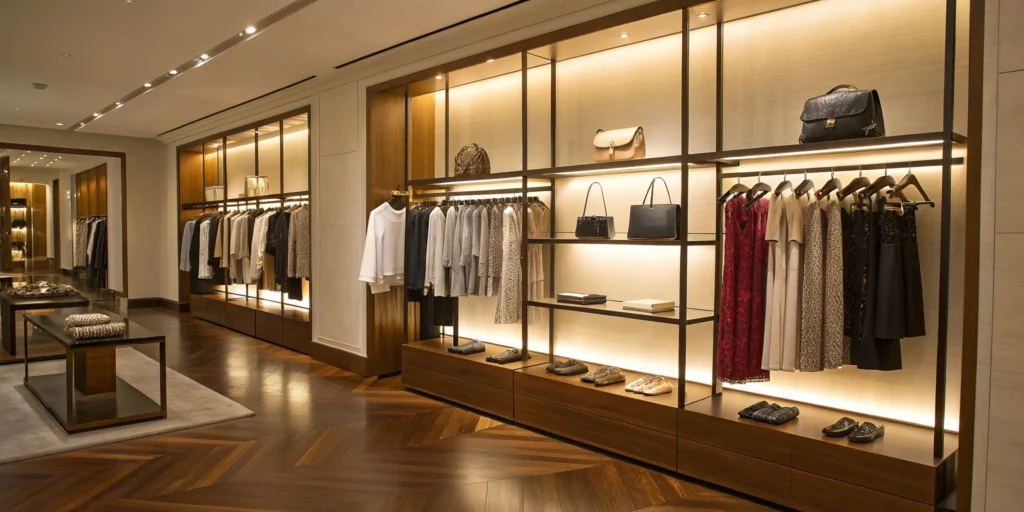
LEDs offer a wide range of color temperatures, measured in Kelvins (K). Cool white light (5000K+) appears crisp and modern, perfect for highlighting technology, jewelry, or white goods. Warm white light (2700K-3000K) evokes comfort and richness, flattering apparel, home decor, and food items. A sophisticated strategy involves using cooler light on perimeter shelving to define space and warmer light on central Retail Displays to create an inviting, focal hub that encourages exploration.
Dynamic and Interactive Lighting
Advanced LED systems can be programmed to change color or intensity. Gentle color cycling can draw attention to a seasonal display, while motion-activated lighting can create a “reveal” moment as a customer approaches. For example, a shoe on a pedestal might be bathed in a soft glow that brightens as someone nears, creating a personalized and memorable interaction that fosters an emotional connection with the product.
Strategic Placement of LED Fixtures for Maximum Impact
Knowing techniques is one thing; applying them in the right locations is what generates sales. Strategic placement ensures your lighting investment works hardest at the points of decision.
Entrance and Window Displays: First impressions are everything. Use high-impact, dramatic LED lighting in windows to stop passersby. This is your brand’s visual handshake. Inside the entrance, ensure lighting is bright and welcoming, immediately highlighting a compelling feature display to capture interest from the first step.
Endcaps and Power Aisles: These high-traffic locations are prime real estate for impulse items. Illuminate endcaps with layered lighting: a strong overhead spotlight for the main product, combined with integrated LED strips on shelves to add depth and make all items clearly visible. This eliminates shadowy corners where products might be overlooked.
Checkout Zones: The final point of persuasion. Countertops and the queue area should be well-lit with warm, flattering LEDs. Use illuminated shelving or small, focused lights to highlight small, enticing items like candy, magazines, phone chargers, or travel-sized products. The bright, clear light reduces friction in examining these last-minute options.
Fitting Rooms and High-Consideration Areas: Here, lighting should build confidence. Use LEDs with excellent color rendering (CRI 90+) that mimics natural daylight, so customers see true colors and textures. Comfortable, accurate lighting reduces return rates and increases satisfaction, making customers more receptive to additional purchases suggested by staff.
Integrating LED Lighting with Other Merchandising Elements
Lighting does not work in isolation. Its power is magnified when integrated with other core visual merchandising strategies.
Combine with Color Storytelling: Use colored LED accents to reinforce a thematic display. A summer beachwear section could be enhanced with subtle blue-tone lighting, while a holiday gift area might use warm gold accents. The light should complement the product colors, not compete with them.
Enhance Texture and Material: LED lighting at different angles can accentuate texture. Grazing light (positioned close and aimed sideways across a surface) can make the weave of a fabric or the grain of wood furniture stand out, adding perceived value and tactile appeal through visual means.
Support Signage and Pricing: Illuminated signage is far more legible and authoritative. Use LED backlit signs for promotions or integrated LED strips to frame price points on Store Fixtures. Clear, well-lit pricing removes a final barrier to an impulse decision, as customers don’t have to search or guess.
Measuring the ROI of LED Lighting Investments
Transitioning to strategic LED lighting requires investment. Measuring its return justifies the spend and guides refinement.
Start by tracking sales metrics for specific zones before and after a lighting redesign. Compare the sales per square foot of a revitalized endcap or feature display. Monitor the sell-through rate of products placed under new accent lighting versus those in standard lit areas. Impulse purchase metrics can be gauged by analyzing point-of-sale data for items commonly bought together; if sales of highlighted accessory items increase after being spotlighted, the lighting is likely a key factor.
Customer behavior studies offer qualitative data. Use heat mapping technology or simple observation to note if dwell time increases in better-lit areas. Are more customers handling the merchandise on a newly illuminated display? This engagement is a direct precursor to purchase.
Finally, consider the operational savings. LED fixtures consume significantly less energy and have much longer lifespans than traditional lighting, reducing both utility and maintenance costs. These savings can be quantified and offset against the initial upgrade investment, improving the overall financial picture.
Frequently Asked Questions
Can LED lighting really make a product look better?
Absolutely. High-quality LEDs with a high Color Rendering Index (CRI) show colors more accurately and vibrantly than standard fluorescent lights. Properly positioned LEDs can also minimize shadows and glare, presenting products in their best possible light, which directly influences perceived quality and desirability.
Is colored LED lighting effective, or is it just a gimmick?
When used strategically and sparingly, colored lighting is highly effective. It can set a mood, define a zone, or highlight a seasonal theme. However, overuse can appear tacky and distort product colors. The best practice is to use colored accents (like a backdrop glow) rather than bathing the actual products in strong colored light.
How energy-intensive are sophisticated LED lighting setups?
Paradoxically, they are far less intensive than old systems. LED technology is inherently efficient. A well-designed, dynamic LED system with multiple fixtures often uses less total energy than a store lit uniformly with outdated halogen or fluorescent lights, because you are using light more purposefully and intelligently.
Can I retrofit my existing fixtures with LED technology?
In many cases, yes. LED retrofit kits and replacement bulbs are widely available for track lighting, recessed cans, and display case fixtures. This can be a cost-effective first step. However, for fully integrated, programmable systems, consulting with a lighting specialist to design a new layout is often recommended for maximum impact.
How do I avoid creating too much visual noise with lighting?
Adhere to a hierarchy. Decide on one or two primary focal points per sightline. Use the brightest, most focused light there. Secondary areas should have supportive, ambient light. Avoid having multiple competing bright spots in a single customer view, as this causes confusion rather than guidance.
Conclusion
Effective visual merchandising strategies are a blend of art and science, and lighting is perhaps the most potent tool in this blend. LED lighted fixtures offer the precision, efficiency, and versatility needed to execute these strategies at the highest level. By understanding the psychology of light, mastering techniques like spotlighting and color temperature control, and placing fixtures in key decision zones, retailers can actively guide customer attention and create the irresistible moments that lead to incremental impulse sales.
The transition to strategic LED lighting is not merely an aesthetic upgrade; it is a measurable investment in the customer experience and store performance. From enhancing product appeal to reducing operational costs, the benefits are multifaceted. In a competitive retail landscape, the store that masters the deliberate use of light holds a significant advantage, turning every aisle and display into an opportunity to engage, delight, and ultimately, convert the browsing customer.