

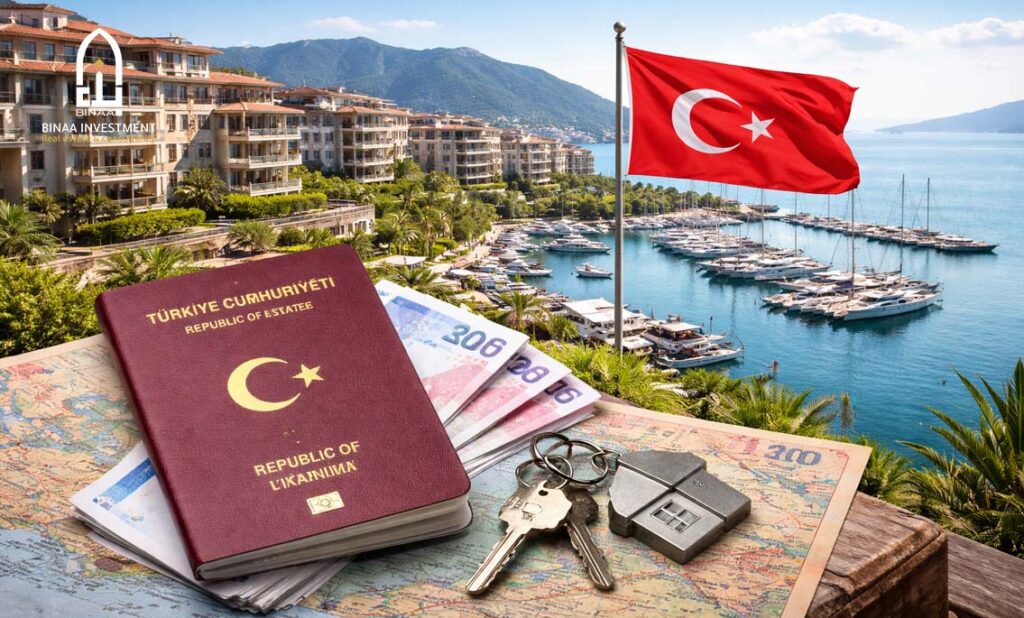
The Turkish Citizenship by Investment Program offers a direct route to a powerful passport through capital investment. While the headline figure—often $400,000 for real estate—is widely advertised, it represents only the starting point of the financial commitment. A successful application requires a comprehensive understanding total financial commitment turkish process, factoring in government fees, professional service charges, and post-approval obligations.
This guide moves beyond the basic investment requirement to detail the full spectrum of costs. We will examine the primary investment options, the mandatory ancillary fees that accompany each, and the practical steps involved in the process. By the end, you will have a realistic financial blueprint for obtaining Turkish citizenship through investment.
The Core Investment Pathways
Turkey offers several official investment routes to citizenship, each with its own capital requirement and operational specifics. The most popular options center on real estate and capital transfers.
Real Estate Acquisition
Purchasing property is the most frequently used route. The minimum qualifying investment was reduced from $1,000,000 to $400,000 in 2022, significantly increasing the program’s appeal. The property must be held for at least three years following the citizenship grant. Crucially, the valuation is determined by a government-licensed appraisal expert, not the purchase price. This appraisal report is a non-negotiable part of the application dossier.
Capital Investment Alternatives
Other pathways include depositing at least $500,000 in a Turkish bank with a three-year non-withdrawal pledge, investing $500,000 in government bonds under the same conditions, or creating jobs for at least 50 Turkish citizens. Each route has distinct administrative and verification procedures, but all lead to the same citizenship outcome.
Beyond the Investment: Mandatory Fees and Costs
The headline investment amount is merely the capital outlay. The total expenditure includes a series of mandatory government fees, taxes, and professional service charges.
Government and Transaction Fees: For a real estate purchase, you must budget for the Title Deed Fee (approximately 4% of the declared property value), VAT (typically 1% or 18%, depending on property type and seller status), and the Property Valuation Report fee. The citizenship application itself incurs fees for passport issuance, notary services, and document translations and certifications. These can collectively add tens of thousands of dollars to your budget.
Professional Service Fees: Navigating Turkey’s legal and bureaucratic landscape requires expert guidance. Engaging a reputable law firm or specialist consultancy is strongly advised. Their fees cover due diligence on the investment, preparation and submission of your application, liaison with government departments, and power of attorney formalities. While this is an additional cost, it mitigates the significant risk of application rejection due to procedural errors. For comprehensive guidance on structuring your investment and managing these ancillary costs, a resource like easyturkishcitizenship.com can be invaluable.
The Step-by-Step Financial Timeline
Mapping costs to the application timeline provides clarity on payment schedules and cash flow requirements.
- Initial Due Diligence & Property Selection (Weeks 1-4): Costs here include consultancy retainer fees, travel for property viewings, and preliminary legal checks. You will secure a Turkish tax number and open a local bank account.
- Investment Execution & Documentation (Weeks 5-12): This is the most capital-intensive phase. It involves transferring the investment funds (e.g., property purchase price), paying the Title Deed Fee and VAT, and obtaining the official Property Valuation Report. All source-of-funds documentation is prepared during this stage.
- Application Submission & Processing (Weeks 13-24): You pay government application fees, translation/notarization costs, and any remaining legal service fees. The application is submitted to the General Directorate of Civil Registration and Nationality.
- Post-Approval Formalities: Upon approval, you pay passport issuance fees and complete biometric data collection. You must also maintain the investment (e.g., not sell the property) for the mandatory three-year holding period.
Common Financial Pitfalls and How to Avoid Them
Underestimating the total financial commitment is the most common mistake. Applicants often overlook or miscalculate the transactional taxes, which are based on the government’s assessed property value, not the purchase price. Another pitfall is failing to account for currency conversion fees and international transfer charges when moving large sums to Turkey.
Choosing an investment that does not meet the official criteria is a costly error. For real estate, the property must receive a clean appraisal report confirming its value meets or exceeds the threshold. Engaging with an unlicensed or inexperienced intermediary can lead to incorrect paperwork, delays, and potential disqualification. Conducting thorough independent due diligence on your service providers is as crucial as due diligence on the investment itself.
Long-Term Financial Considerations
Obtaining citizenship is not the end of the financial relationship with Turkey. New citizens become tax residents if they spend more than six months per year in the country, making worldwide income subject to Turkish taxation. While Turkey has double taxation treaties with many nations, understanding your personal tax liability is essential.
Furthermore, the three-year investment lock-in period requires financial planning. The capital is immobilized, and the asset’s value may fluctuate. After the three years, if you choose to sell, standard capital gains taxes may apply. A clear exit strategy should be part of your initial investment decision. For a detailed analysis of the ongoing obligations and a precise breakdown of the Turkish citizenship by investment cost from start to finish, consulting with a specialist firm is highly recommended. You can find such detailed financial models at Turkish citizenship by investment cost.
Frequently Asked Questions
What is the absolute minimum total cost for the real estate route?
While the property investment starts at $400,000, the total minimum financial commitment is typically $430,000 to $450,000. This includes the mandatory 4% Title Deed Fee ($16,000), property valuation fees, notary charges, translation costs, and basic legal assistance. It does not include optional property taxes, comprehensive legal packages, or travel expenses.
Can I finance the investment with a mortgage or loan?
No. The regulations explicitly require the investment capital to come from personal funds transferred from abroad. Financing the minimum investment amount through local debt or a mortgage from a Turkish bank invalidates the application. The authorities will trace the fund transfers to verify they originated from your overseas accounts.
Are there recurring costs after gaining citizenship?
Yes. Beyond personal living expenses, you are responsible for annual property taxes (a small percentage of the property value) and utility bills for any real estate held. If you retain the property beyond the three-year lock-in, standard maintenance and insurance costs also apply. Tax residency obligations are triggered by length of stay, not citizenship alone.
How long does the entire process take from investment to passport?
From the date of property purchase or capital transfer, the process typically takes 3 to 6 months to receive citizenship approval and your Turkish ID card. The passport can be collected shortly thereafter. The entire timeline is highly dependent on document preparation speed and government processing queues.
What happens if my property appraisal falls below $400,000?
If the official valuation report states a value below the $400,000 threshold, your application will be rejected. You cannot combine multiple smaller properties to reach the minimum. It is therefore critical to agree on a purchase price contingent on a successful appraisal or to select a property with a clear market value significantly above the threshold to provide a buffer.
Is the investment refundable if my application is denied?
This depends on the investment type and the reason for denial. If you purchased real estate and the application is rejected due to a procedural error not related to the property’s value, you still own the asset and can sell it. However, if the denial is because the property was appraised below $400,000, you are still the owner of that undervalued asset. Bank deposits and other capital investments are typically returned if the application fails, minus any administrative or banking fees, but contractual terms with your service provider may involve non-refundable fees.
Conclusion
The path to Turkish citizenship by investment demands a detailed and realistic financial plan. The headline investment figure is a gateway, but the true cost encompasses government taxes, mandatory fees, and essential professional services. A successful application hinges on this comprehensive budgeting, which prevents unexpected shortfalls and procedural missteps.
By approaching the program with a full understanding total financial commitment turkish investors can make informed decisions, select the most suitable investment route, and navigate the process with confidence. The result is not just a second passport, but a sound financial investment managed with clarity from the initial valuation to the final passport collection.