

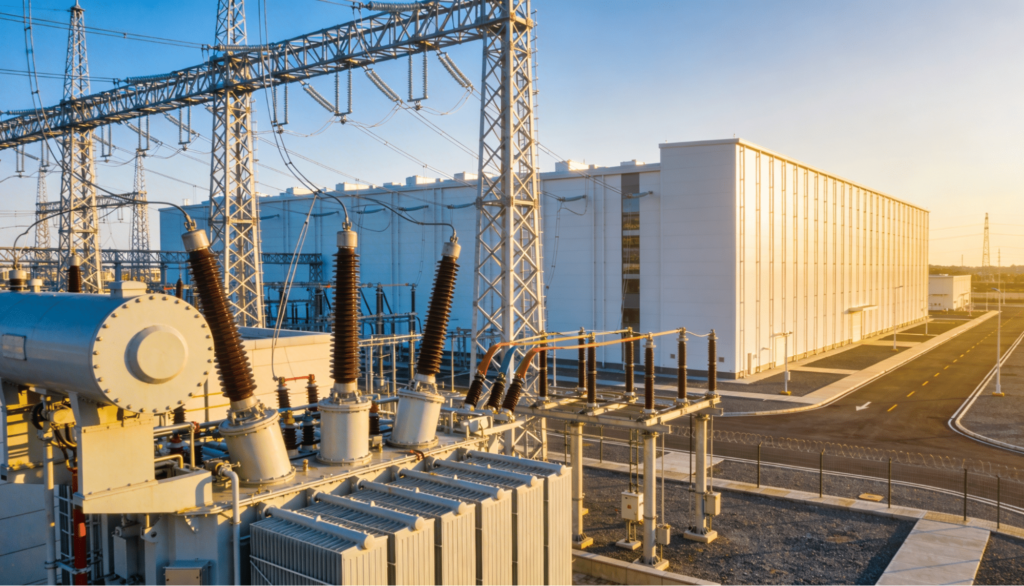
Choosing a location for a new data center is one of the most consequential decisions a developer or enterprise will make. It’s a multi-decade commitment with billions of dollars in capital expenditure on the line. While factors like fiber connectivity and proximity to markets are vital, the physical and utility prerequisites often make or break a project. An industrial site isn’t truly data-center ready unless it has guaranteed access to massive, redundant power and sustainable water resources. The triad of substations, transmission lines, and water rights forms the non-negotiable foundation for any hyperscale or enterprise facility.
This isn’t about finding cheap land. It’s about securing a site where the local utility can deliver hundreds of megawatts of power, where high-voltage transmission infrastructure is already proximate or can be built, and where water for cooling can be sourced reliably without sparking community or regulatory conflict. Getting these elements wrong leads to costly delays, stranded assets, or operational instability. Getting them right creates a competitive advantage for decades. This article examines each of these three critical pillars, explaining what developers must verify before considering a site shovel-ready.
The Power Imperative: Beyond Grid Connection
Data centers are power plants in reverse—they consume staggering amounts of electricity rather than generating it. A single hyperscale campus can draw over 500 megawatts, equivalent to the power needs of a medium-sized city. Therefore, the first and most critical assessment of any site is its electrical capacity.
Evaluating Substation Proximity and Capacity
A site being “in the grid” is meaningless. The relevant question is: how close is a primary substation with available capacity? A substation transforms high-voltage transmission power into lower-voltage distribution power. Ideal sites are within one to two miles of an existing substation with ample, unallocated capacity. Building a new substation or significantly upgrading an existing one can add 18 to 36 months to a project timeline and cost tens of millions of dollars, often borne by the developer.
Due diligence must go beyond utility marketing materials. Engage directly with utility planners to understand the feeder routes, the age of infrastructure, and the queue for other large-scale projects. Confirm the utility’s ability to provide dual, geographically diverse feeds from separate substations—a standard requirement for Tier III+ uptime. Without this redundancy, the site fails a fundamental reliability test.
The Role of High-Voltage Transmission Lines
While substations are the local interface, high-voltage transmission lines (typically 69kV, 138kV, or higher) are the arteries bringing power from generation sources. A site may be near a substation, but if that substation is fed by a single, congested transmission corridor, the entire power strategy is vulnerable. Proximity to robust, redundant transmission infrastructure is a top-tier site selection criterion.
Developers should analyze regional transmission organization (RTO) maps and planned investments. A site adjacent to a major transmission right-of-way is significantly more valuable than one that isn’t. Securing the rights to tap into these lines often involves complex negotiations with the transmission owner and can require new switchyards or switching stations on the property. For ongoing analysis of how these power dynamics influence development, industry resources like https://carsonscorner.media/topics/data-centers/ provide valuable context.
Securing Water Rights for Sustainable Cooling
Despite advances in air-cooling and liquid immersion technologies, water remains a highly efficient medium for removing heat from server racks. Most large facilities use evaporative cooling towers or adiabatic systems, which consume water through evaporation and blowdown. A 100-megawatt data center can use millions of gallons of water per day, placing it in the same category as a small industrial or agricultural user.
Understanding the Legal Framework of Water Rights
In many regions, particularly in the western United States, water is a separately owned legal right, not an automatic utility tied to land ownership. Water rights are governed by a complex mix of state laws, often following the doctrine of prior appropriation (“first in time, first in right”). Simply purchasing land does not guarantee the right to withdraw water from a river, aquifer, or municipal system.
A developer must conduct a thorough title search to identify any appurtenant water rights and verify their priority date, flow rate (in acre-feet per year or gallons per minute), and point of diversion. These rights may also be subject to calls from senior rights holders during drought, making them unreliable. In many cases, purchasing or leasing additional, senior water rights from agricultural or municipal sources is a prerequisite for project approval.
Sourcing and Sustainability Strategies
Given increasing public scrutiny and drought conditions, demonstrating sustainable water use is now a permitting necessity. Developers are pursuing multiple strategies:
- Municipal Water: Partnering with a city or water district that has surplus treated water and the infrastructure to deliver it. This often requires paying significant impact fees and funding pipe extensions.
- Groundwater: Drilling on-site wells requires permits and hydrogeological studies to prove the withdrawal won’t negatively impact neighboring wells or cause subsidence.
- Water Reuse: The most sustainable path involves using recycled or reclaimed water from municipal treatment plants. While it requires separate (often purple) piping, it mitigates community concerns and regulatory hurdles.
- Direct Liquid Cooling: Adopting advanced cooling architectures that dramatically reduce or even eliminate water consumption for heat rejection, though they may increase power usage.
A site with a clear, permitted, and sustainable path to a large-volume water supply is exponentially more viable than one without.
The Site Readiness Checklist: Integrating All Factors
Power and water are the two heaviest “utilities,” but true readiness requires their integration with other physical and logistical factors. A holistic checklist prevents fatal flaws from emerging late in the due diligence process.
Geophysical and Environmental Constraints: Conduct Phase I and II environmental site assessments. Avoid floodplains, seismic fault zones, and areas with contaminated soil. The site must support the immense load-bearing requirements of data center slabs and backup generators.
Fiber Optic Connectivity: While fiber can be run to a site, proximity to existing diverse fiber backbones reduces cost and latency. The ideal site sits at the intersection of multiple major fiber routes.
Transportation and Logistics: Construction requires access for heavy trucks delivering transformers, chillers, and generators. Permanent operations need roads capable of supporting daily fuel deliveries for backup generators.
Permitting and Community Relations: Zoning must allow for critical facility use. Engage with local planning commissions and community stakeholders early to address concerns about noise, traffic, water use, and visual impact. A smooth permitting process is as valuable as any physical asset.
Financial and Timing Implications
The cost of making a site data-center ready is frequently underestimated. Budgets must account not only for core building construction but for off-site infrastructure upgrades. These “landed costs” can include:
- Contributions for new substation construction or feeder lines.
- Water system impact fees and pipeline extension costs.
- New fiber conduit installation over miles of public right-of-way.
- Property tax incentives or payments in lieu of taxes (PILOTs) negotiated with local governments.
The timeline from land acquisition to commissioning is dominated by these utility and permitting workstreams. A greenfield site with no proximate power or water may take 4-5 years to become operational. A truly ready site—with secured rights, capacity reservations, and a clear permit path—can cut that timeline in half, offering a massive time-to-market advantage. Staying informed on the evolving economics of these projects is crucial, as detailed in sector-focused reports like https://carsonscorner.media/topics/data-centers/.
Frequently Asked Questions
How much power does a typical data center need?
Requirements vary widely. A large enterprise facility may need 10-30 megawatts (MW). A single hyperscale data center building often requires 50-100 MW, and an entire campus of multiple buildings can demand 300-500 MW or more. The key is not just total megawatts but the ability to receive that power via two completely independent utility feeds for redundancy.
What does “water rights” mean for a data center developer?
It means having the legal and permitted authority to withdraw a specific volume of water from a specific source (e.g., an aquifer, river, or municipal system) for use in cooling operations. In regulated regions, these rights are a separate asset that must be purchased, leased, or transferred, and they come with strict terms and priority levels that affect reliability during shortages.
Can a data center be built without using water for cooling?
Yes, using air-cooled chillers or direct-to-chip liquid cooling systems that reject heat to the air via dry coolers. However, these systems often have a higher energy consumption (increasing Power Usage Effectiveness, or PUE) and may have limits in very hot climates. Most large-scale facilities still use some form of water-aided cooling for its efficiency, but the industry is moving toward significantly reduced water use.
How long does it take to get a new substation built?
The process from planning to energization typically takes 2 to 3 years. It involves utility engineering, equipment procurement (transformers have long lead times), siting and environmental reviews, permitting, and construction. This timeline is a major reason why proximity to existing, underutilized substations is so valuable.
Is fiber connectivity as important as power and water?
It is critical for functionality but generally more flexible to install. While power and water are massive, immovable “bulk” utilities, fiber optic cable can be trenched or bored to a site over distances of 10-20 miles if necessary. The greater risk is a lack of diverse fiber paths, which creates a single point of failure for network connectivity.
Conclusion
Identifying a data-center ready industrial site is a complex engineering, legal, and financial puzzle. The presence of robust electrical infrastructure—specifically, proximate substations with available capacity and strong transmission line access—forms the non-negotiable bedrock of any project. Equally critical is a secure, sustainable, and legally defensible solution for water sourcing, whether through rights, municipal supply, or advanced cooling designs that minimize consumption. These elements outweigh almost all other location factors.
Ultimately, the goal is de-risking the project. A site that scores highly on power, water, and integrated readiness commands a premium because it converts uncertainty into a executable plan. As data center demands grow and resources become more constrained, thorough due diligence on these foundational pillars isn’t just best practice—it’s the only way to ensure a facility can be built, powered, cooled, and operated reliably for its entire lifespan. The future of digital infrastructure depends on making these strategic choices correctly from the very first plot of land.