

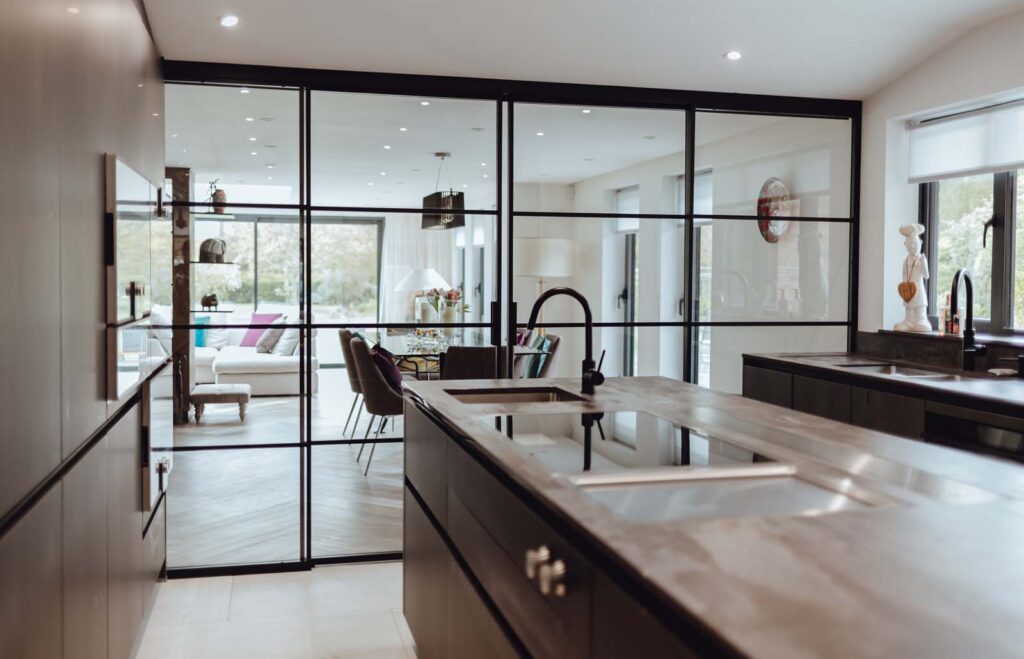
In high-end residential design, the choice of interior doors has evolved from a purely functional consideration to a central architectural statement. The standard swing door no longer suffices for homeowners seeking to maximize space, light, and a sense of fluidity. Instead, a sophisticated alternative is defining contemporary luxury interiors: the custom glazed internal sliding door.
This shift is driven by a demand for solutions that are as intelligent as they are beautiful. Custom glazed sliders address the core challenges of modern luxury living—connecting spaces without sacrificing privacy, ushering natural light into deep floor plans, and creating a seamless aesthetic that feels both expansive and curated. They represent a move away from compartmentalized rooms toward dynamic, adaptable living environments.
This article examines the specific reasons behind this trend, from the undeniable visual impact to the practical engineering and customization options that make these doors a worthwhile investment for discerning homeowners.
The Architectural Impact of Light and Space
The primary allure of custom glazed internal sliding doors lies in their transformative effect on a home’s perception of space and light. In luxury properties, where square footage is ample but atmosphere is paramount, these doors act as strategic tools for the architect and designer.
By replacing solid walls with glazed panels that glide open, physical and visual barriers dissolve. A living room flows effortlessly into a study or a sunroom, making the entire area feel grander and more interconnected. This is particularly valuable in open-plan designs that still require occasional separation. The doors provide a flexible boundary that can be opened to entertain or closed to create a quiet retreat, all without the spatial intrusion of a door swing.
Furthermore, they become conduits for natural light. A well-placed Internal Sliding doors can channel daylight from a sun-drenched atrium into a darker central hallway or kitchen. This passive illumination enhances the home’s energy efficiency and wellbeing quotient, bathing interiors in a quality of light that artificial sources cannot replicate. The result is an interior that feels airy, vibrant, and intrinsically connected to the exterior environment.
Creating Focal Points and Visual Continuity
Beyond mere openness, these doors serve as deliberate focal points. A floor-to-ceiling glazed slider with a minimalist frame can frame a garden view like a living painting. The hardware—from discreet pocket door systems to bold, exposed track mechanisms—becomes an expression of style, whether industrial, minimalist, or traditional. The glass itself can be a design element, with options for subtle tints, textured finishes, or even integrated blinds, ensuring visual continuity that aligns with the home’s overall design narrative.
Beyond Aesthetics: Functional and Performance Benefits
While the visual appeal is immediate, the decision to upgrade is grounded in robust functional advantages. Luxury homeowners invest in performance, and custom glazed sliding doors deliver on several fronts.
Spatial Efficiency: In rooms where every square inch is meticulously planned, the sliding mechanism is a game-changer. It eliminates the need for clearance arcs required by swing doors, allowing furniture to be placed closer to doorways and enabling more efficient use of the room’s footprint. This is crucial in master suites, closets, and media rooms where layout flexibility is key.
Acoustic and Thermal Control: Customization extends to performance glass. Laminated or acoustic glass variants can significantly reduce sound transmission between rooms, such as between a home cinema and a living area. Similarly, low-emissivity (Low-E) coatings and argon gas fills between double or triple glazing provide superior thermal insulation, contributing to a more stable indoor climate and reduced energy costs—a non-negotiable in modern, sustainable luxury builds.
Durability and Ease of Use: High-end systems feature premium components: reinforced aluminum or steel frames, commercial-grade roller bearings, and soft-close mechanisms. This engineering ensures effortless, silent operation for decades, a mark of quality that prevents the jarring sounds and sticking often associated with cheaper sliding doors.
The Customization Spectrum: Defining the Bespoke Experience
The term “custom” is what separates a standard upgrade from a truly integrated architectural feature. For luxury homes, the ability to tailor every detail is the main attraction.
Frame Materials and Finishes: The frame material sets the tone. Slimline steel frames offer an industrial-chic look with immense strength, allowing for larger glass panes with less visible support. Powder-coated aluminum provides a lighter, corrosion-resistant option available in virtually any color. For a warmer aesthetic, timber-clad frames combine the thermal performance of aluminum with the natural beauty of oak or walnut.
Glass Specifications and Privacy: Glass is not a single option but a menu of choices. Clear, ultra-transparent glass maximizes light and views. For privacy without sacrificing light, homeowners select from frosted, satin-etched, or reeded glass. Smart glass, which transitions from clear to opaque with the flip of a switch, represents the pinnacle of high-tech customization. Tinted or reflective glass can also be used for solar control in sun-drenched spaces.
Configuration and Hardware: The configuration is designed around the wall space and opening. Options include single sliders, bi-parting doors (that open from the center), or multi-panel systems that stack neatly against a wall. The hardware—the track, handles, and pulls—is selected for both function and form, with finishes like brushed brass, matte black, or polished chrome acting as the final piece of jewelry.
Integration with Smart Home Systems
Modern luxury is synonymous with seamless technology. Custom glazed sliding doors are increasingly integrated into whole-home automation systems. Motors can be installed to allow doors to open or close via voice command, smartphone app, or as part of a predefined scene (e.g., “Good Morning” opens the door to the balcony).
This integration enhances both convenience and security. Doors can be programmed to lock automatically when closed or to interface with security sensors. The ability to control natural light and spatial flow digitally aligns perfectly with the connected, efficient lifestyle that high-end homeowners expect. When specifying a system, discussing smart-ready capabilities with the manufacturer or installer is essential for future-proofing the installation.
Considerations for Specification and Installation
The upgrade to a custom glazed sliding door is a significant investment that demands careful planning. Success hinges on two phases: precise specification and flawless installation.
Early architectural consultation is critical. Decisions must be made during the design or renovation phase, especially for doors that will recess into a pocket wall, as this requires specific framing and wall construction. Structural support for large glazed panels, particularly on upper floors, must be assessed by an engineer.
Choosing a specialist supplier and installer is perhaps the most important step. The quality of the sliding internal doors is only as good as the precision of its fitting. A reputable contractor will conduct detailed site surveys, advise on the best configuration for the space, and ensure the installation is perfectly level and square for smooth, reliable operation. They will also handle the crucial sealing and insulation details to guarantee the door’s thermal and acoustic performance.
Frequently Asked Questions
What makes a glazed internal sliding door “custom”?
A truly custom door is engineered to the exact dimensions, style, and performance requirements of your specific opening. It involves selecting the frame material (e.g., steel, aluminum), finish, glass type (clear, frosted, acoustic, Low-E), configuration (single, bi-parting, pocket), and hardware. It is not an off-the-shelf unit but a bespoke component built for your space.
Are these doors suitable for privacy between rooms?
Absolutely. Privacy is easily achieved through glass selection. Options like frosted, reeded, or satin-etched glass obscure the view while transmitting ample light. For ultimate flexibility, switchable smart glass can change from clear to opaque instantly. Laminated acoustic glass also provides a degree of sound privacy.
How much maintenance do custom glazed sliding doors require?
Maintenance is generally minimal. High-quality aluminum or powder-coated steel frames require only occasional cleaning with a damp cloth. The track system should be kept free of debris and dust, and rollers or bearings may benefit from a light lubricant annually as per the manufacturer’s instructions. The glass is cleaned like any other window.
Can they be installed in an existing home without major renovation?
Yes, but the scope of work depends on the configuration. A surface-mounted sliding door that runs on an external track is often the least invasive retrofit. Installing a door that pockets into the wall, however, requires significant structural modification to create the cavity, making it more suitable for major renovations or new builds.
What is the typical lead time for a custom door?
Lead times vary significantly by manufacturer and complexity. For a fully bespoke product, from initial survey to installation, expect a timeframe of 8 to 14 weeks. This allows for detailed design, fabrication of custom components, and careful preparation. It’s advisable to initiate the process well ahead of your project’s scheduled installation phase.
Do glazed sliding doors offer good thermal insulation?
With the correct specification, they can offer excellent insulation. The key is opting for a thermally broken frame (which prevents cold bridging) and double or triple glazing with Low-E coatings and argon gas fill. This combination can achieve U-values comparable to high-performance windows, making them energy-efficient.
Conclusion
The move toward custom glazed internal sliding doors in luxury homes is a considered response to the demands of modern design. It is a trend less about fashion and more about a fundamental improvement in how space is experienced and utilized. These doors masterfully resolve the tension between open, light-filled living and defined, private rooms, offering a flexible solution that adapts to daily life.
Ultimately, the upgrade represents an investment in the quality of the home itself. It enhances architectural value, improves functional performance, and delivers a level of bespoke detail that defines luxury living. For homeowners and designers looking to create interiors that are both profoundly beautiful and intelligently crafted, the custom glazed sliding door has become an indispensable element of contemporary residential design.