
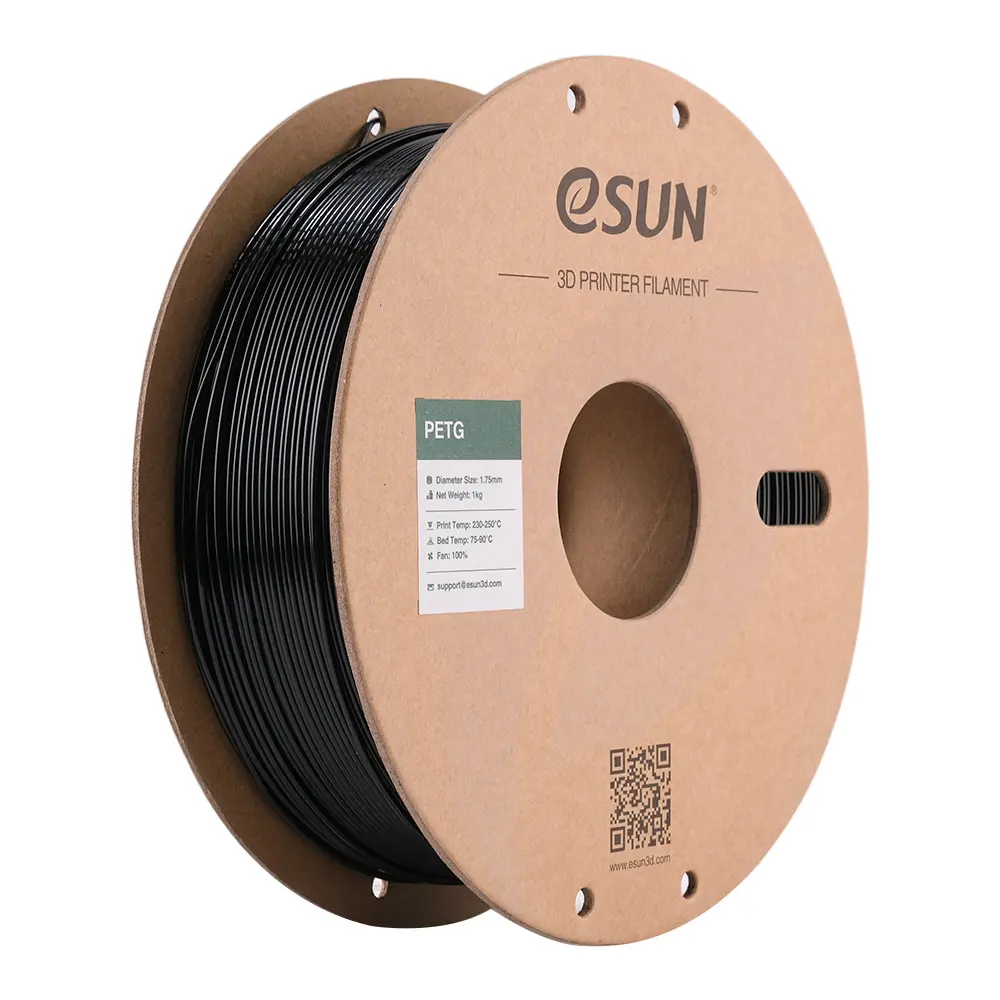
The journey from traditional PET plastics to modern 3D printing materials represents one of the most significant advances in additive manufacturing. While polyethylene terephthalate (PET) has served industries for decades as a reliable thermoplastic, the evolution of 3D print filament petg has unlocked capabilities that makers, engineers, and manufacturers once thought impossible with consumer-grade equipment.
This transformation didn’t happen overnight. It required understanding PET’s limitations in extrusion-based printing and systematically addressing each challenge through chemical modification. The result? Materials that combine the best properties of their predecessor with enhanced characteristics specifically designed for layer-by-layer fabrication.
Understanding Traditional PET and Its Limitations
PET revolutionized packaging and textile industries starting in the 1970s. Its molecular structure provides excellent clarity, chemical resistance, and barrier properties—perfect for beverage bottles and food containers. However, these same characteristics created obstacles when adapted for 3D printing.
The crystallization behavior of pure PET poses the primary challenge. During cooling, PET molecules organize into highly ordered crystal structures. This crystallization causes significant shrinkage and warping as printed layers cool at different rates. Parts would frequently separate from build plates or develop internal stresses that led to cracking.
Additionally, PET’s relatively high glass transition temperature (around 75-80°C) and narrow processing window made it difficult to print consistently. The material required precise temperature control that early desktop printers couldn’t reliably maintain. Adhesion between layers remained unpredictable, and the material’s brittleness after printing limited practical applications.
The Chemical Innovation Behind PETG
PETG emerged as a solution through a straightforward yet effective modification: adding glycol to the polymer chain during polymerization. This glycol modification—represented by the “G” in PETG—disrupts the regular molecular structure that enables crystallization in standard PET.
By incorporating 1,4-cyclohexanedimethanol (CHDM) as a co-monomer, manufacturers created a material that remains amorphous during cooling. This means PETG doesn’t undergo the dramatic molecular reorganization that causes PET to shrink and warp. The result is a material that maintains dimensional stability throughout the printing process.
The glycol modification also lowers the glass transition temperature to approximately 65-70°C, widening the processing window. This makes PETG more forgiving during printing, reducing the likelihood of defects from slight temperature variations. The material flows more predictably through the hotend and adheres more reliably to both the build surface and previous layers.
Mechanical Property Improvements
PETG doesn’t just print more easily—it performs better in finished applications. The modified molecular structure provides enhanced impact resistance compared to PET, with elongation at break typically reaching 50-100% versus PET’s 30-50%. This increased ductility means parts bend rather than shatter under stress.
Tensile strength remains competitive with PET at 50-55 MPa, while the material maintains excellent chemical resistance to acids, bases, and most solvents. Unlike PLA, which degrades in humid environments, PETG resists moisture absorption that would compromise mechanical properties over time.
PETG-BASIC: Optimizing for Accessibility and Consistency
As PETG gained popularity in the 3D printing community, manufacturers recognized that not all applications require premium performance characteristics. PETG-BASIC emerged as a refined formulation targeting consistent quality and user-friendly printing at a more accessible price point.
The development philosophy behind PETG-BASIC focuses on reducing variables that cause print failures. By tightening manufacturing tolerances on filament diameter (typically ±0.03mm versus ±0.05mm for standard grades) and optimizing the additive package, this variant delivers predictable results across different printer brands and models.
PETG-BASIC typically incorporates carefully balanced additives that improve melt flow without sacrificing mechanical properties. These formulations print successfully at slightly lower temperatures (220-235°C versus 230-250°C for some standard PETG), reducing energy consumption and minimizing oozing during travel moves.
Practical Applications and Use Cases
The reliability of PETG-BASIC makes it ideal for functional prototypes, mechanical parts, and products requiring moderate environmental resistance. Engineers use it for jigs, fixtures, and tooling that must withstand repeated use without degradation. Hobbyists appreciate its balance of strength and ease of printing for everyday projects.
The material’s transparency (in natural/clear variants) suits applications where visual inspection of internal components is valuable. Enclosures for electronics, protective guards, and display cases benefit from PETG-BASIC’s combination of clarity and impact resistance.
Comparing Performance Across the PET Family
When evaluating materials for specific applications, understanding the trade-offs between PET, PETG, and PETG-BASIC becomes crucial. Pure PET offers superior heat resistance and rigidity but remains impractical for most FDM printing scenarios. The material’s tendency to crystallize makes it suitable only for specialized industrial equipment with heated chambers and precise environmental control.
PETG represents the premium option within the glycol-modified family. It delivers maximum mechanical properties and can handle more demanding applications involving higher temperatures (up to 70°C continuous use) or greater mechanical stress. The material works well for automotive components, medical device prototypes, and outdoor applications where UV resistance matters.
PETG-BASIC sacrifices minimal performance while gaining significant advantages in printability and cost-effectiveness. For applications where operating temperatures stay below 60°C and mechanical loads remain moderate, the performance difference becomes negligible. The material’s consistency reduces failed prints and wasted material, often making it more economical despite similar per-kilogram pricing.
Processing Considerations and Best Practices
Successfully printing with 3D print filament in the PETG family requires understanding their unique characteristics. Unlike PLA, these materials benefit from slower cooling. Excessive part cooling can cause layer adhesion issues and surface defects. Most prints succeed with part cooling fans running at 30-50% after the first few layers.
Bed adhesion requires attention but not extreme measures. A clean glass bed at 70-80°C typically provides sufficient adhesion, though textured PEI sheets or glue stick application can improve first-layer success rates. The key is avoiding excessive adhesion that makes part removal difficult and risks damaging the print surface.
Storage and Handling
PETG and PETG-BASIC absorb moisture from the air more readily than PLA but less than nylon. Filament stored in humid environments may produce popping sounds during printing and create surface blemishes from steam bubbles. Keeping spools in sealed containers with desiccant maintains optimal printing characteristics.
Before printing with filament that’s been exposed to humidity, drying at 65°C for 4-6 hours restores the material to optimal condition. This simple step prevents the majority of surface quality issues that users attribute to “bad filament.”
The Future of Glycol-Modified Filaments
Material science continues advancing beyond basic PETG formulations. Manufacturers now offer variants incorporating carbon fiber, glass fiber, or other reinforcements that dramatically increase stiffness and strength. These composite materials maintain PETG’s printability while approaching the performance of engineering thermoplastics.
Colorant technology has also evolved. Early PETG filaments offered limited color options, but modern manufacturing techniques produce vibrant, consistent colors without compromising mechanical properties. Specialty finishes including matte, silk, and metallic effects expand creative possibilities while retaining the material’s functional advantages.
Research into bio-based glycol sources may eventually reduce PETG’s environmental footprint without altering its desirable printing characteristics. As sustainability becomes increasingly important, these developments could make glycol-modified PET materials competitive with bio-derived alternatives like PLA in environmental considerations.
Frequently Asked Questions
What makes PETG different from regular PET plastic?
PETG contains glycol-modified molecular chains that prevent crystallization during cooling. This modification eliminates the severe warping and shrinkage that makes pure PET nearly impossible to print on standard FDM printers. The glycol addition also improves flexibility and impact resistance while maintaining PET’s chemical resistance and strength.
Is PETG-BASIC lower quality than standard PETG?
PETG-BASIC isn’t lower quality—it’s optimized differently. It focuses on consistent diameter tolerances and printability rather than maximum mechanical performance. For most applications, the performance difference is negligible, while the improved consistency and lower cost make it more practical for everyday printing needs.
Can PETG filaments be used for food-contact applications?
The raw material is generally food-safe, but FDM printing creates microscopic gaps between layers where bacteria can harbor. Unless printed parts are sealed with a food-safe coating or the specific filament manufacturer certifies their product for food contact (including colorants and additives), PETG prints should not contact food directly.
How does PETG compare to ABS in terms of strength and durability?
PETG offers superior impact resistance and flexibility compared to ABS, making it less prone to shattering. However, ABS withstands higher temperatures (up to 90-100°C versus 70°C for PETG). PETG prints with less warping and doesn’t require an enclosed printer, making it more user-friendly while delivering comparable or better performance for most applications.
Why does my PETG print show stringing between parts?
PETG’s excellent layer adhesion comes from its tendency to remain slightly fluid at printing temperatures. This same characteristic causes stringing. Reduce stringing by lowering printing temperature by 5-10°C, increasing retraction distance by 1-2mm, and ensuring your filament is properly dried. Slight stringing can be easily removed with a heat gun.
What’s the shelf life of PETG filament?
Properly stored PETG filament (sealed with desiccant, away from direct sunlight) remains printable indefinitely. The material doesn’t degrade chemically over time like some biodegradable filaments. However, moisture absorption will affect print quality if the filament isn’t stored correctly. Even years-old filament prints perfectly after proper drying.
Conclusion
The evolution of 3D print filament petg from traditional PET represents a masterclass in material science solving real-world manufacturing challenges. By understanding PET’s limitations and systematically addressing them through molecular modification, researchers created materials that democratized functional part production for millions of makers worldwide.
PETG and PETG-BASIC now serve as workhorses in workshops, labs, and factories precisely because they balance performance with practicality. As additive manufacturing continues maturing from a prototyping tool into a production technology, these materials will remain fundamental—not despite their connection to decades-old PET chemistry, but because of it. Sometimes the most significant innovations come not from inventing entirely new materials, but from perfecting what already works.